Can You Trace What Your Agent Paid For Before Each Trade?
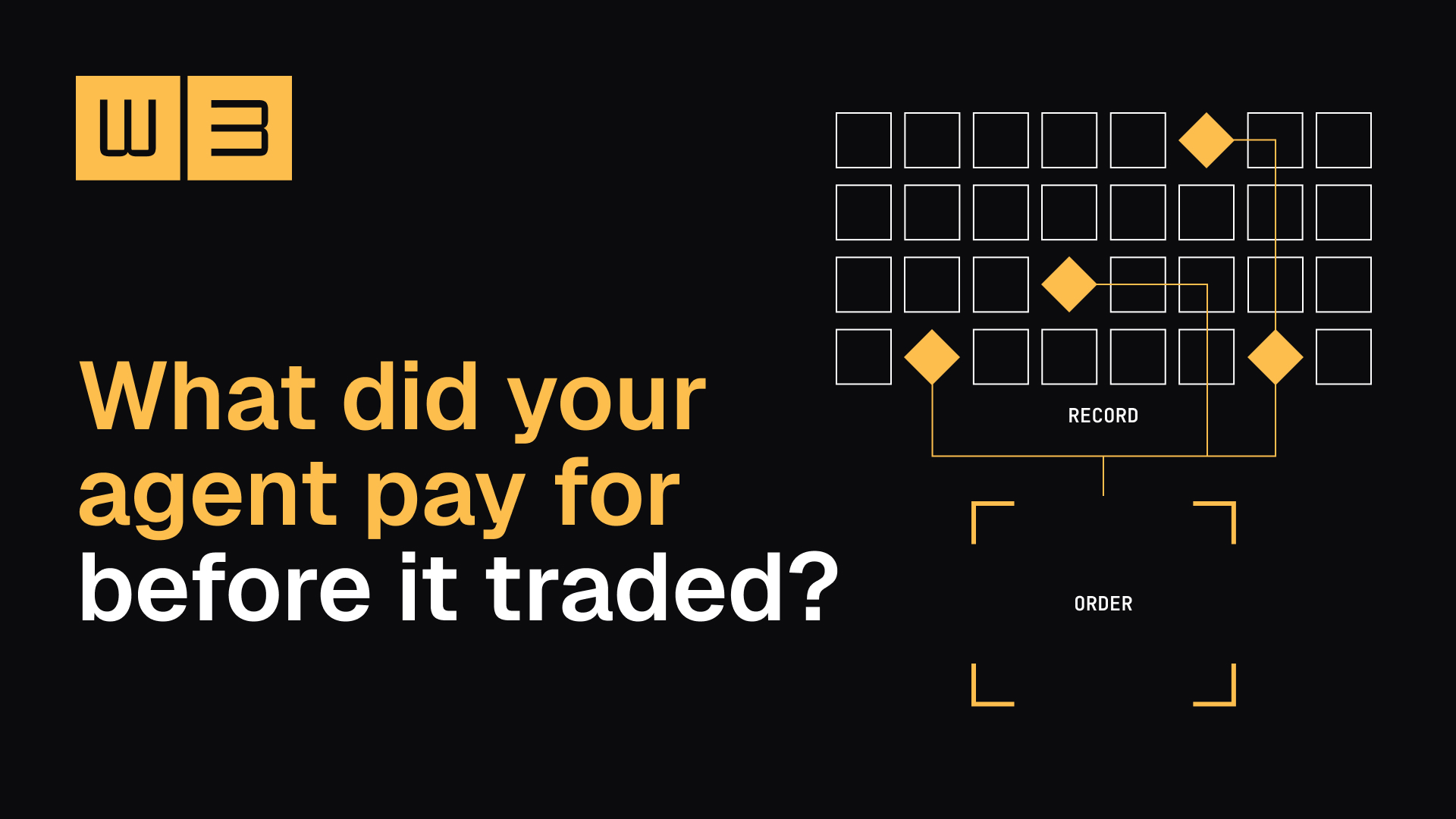
If an AI agent on your trading desk bought market data three times this morning and then placed an order, could your finance team say which purchase drove the trade and what it cost? On September 22, Coinbase brought that question to any desk willing to give an agent an account.

If an AI agent on your trading desk bought market data three times this morning and then placed an order, could your finance team say which purchase drove the trade and what it cost? On September 22, Coinbase brought that question to any desk willing to give an agent an account.
That day, Coinbase expanded Coinbase for Agents, the account its customers can hand to an AI agent, to US stocks and ETFs. Agents on the account can now pay for data per request through x402, the company says. An agent can find a signal, pay for the data that confirms it and place the trade from one account.
Coinbase built x402 so software can pay for a tool call at the moment it makes one. Its own developer team says the protocol gives the company no special advantage. The edge Coinbase wants is in trading. Enterprises should read that as a hint about where their own edge will come from.
Coinbase handed the payment rail to a foundation
Coinbase's developer platform team compares x402 to Anthropic releasing the Model Context Protocol, the open standard that lets AI models connect to outside tools. One company builds the standard, publishes it and then competes on what runs over it.
In April, Coinbase handed governance of x402 to the x402 Foundation, whose founding members include Google, Stripe, Visa, Mastercard and Amazon Web Services. Any firm can build on the rail. Coinbase is betting that more agents paying for more things means more agents trading, and it wants to be the account they trade from.
The API key was the bottleneck
Kevin Leffew, who co-authored the x402 whitepaper and works on developer partnerships at Coinbase, described the user problem on a recent livestream. He doesn't expect his sister to set up keys across more than 700 API dashboards. She might buy $100 of USDC, a dollar stablecoin, with Apple Pay and pay per call instead.
An agent that needs a data source mid-task can't stop to open an account and wait for a key. Under x402 the payment travels inside the request. The provider checks it and returns the data in the same exchange.
That removes the step where a person in procurement used to approve the vendor and hand over credentials.
Research now sells one request at a time
On September 1, the market data firm Massive opened its US stock data to agents that pay per request, with no account to create and no key to manage. Coinbase verifies and settles each payment before Massive returns the data.
Leffew put the trading case in one line: "Tool calling at request timing is really important for trading agents."
A human analyst subscribes once and reads all month. An agent buys the number it needs at the second it needs it, then acts on that number before the next request goes out.
The volume comes from many small purchases
Coinbase says x402 has processed more than 230 million transactions and more than $54 million in volume in just over a year. That works out to about 23 cents per payment.
Finance teams built spend oversight around invoices, monthly statements and annual vendor reviews. Those tools assume each purchase is large enough and rare enough for a person to look at. An agent paying per request can produce more line items in a day than a vendor review is built to read.
Guardrails cover the moment before the trade
Each agent on Coinbase for Agents can run in an isolated portfolio with guardrails such as maximum trade sizes and daily limits. Those controls answer the first question a risk officer asks, which is what the agent is allowed to do. They answer it well.
A second question arrives after the agent acts. A finance leader still has to explain which data drove which trade and what that data cost. A daily limit caps the total. It doesn't connect a 23-cent purchase to the order that followed it.
Accountability depends on that connection. An auditor, a board or a regulator will ask why the agent traded. Answering means knowing what it bought and what it read before the order.
The record has to keep pace with the agent
When an agent buys information and acts on it within seconds, the link between payment, data and decision has to be captured as it happens. Rebuilding it a month later means matching a statement full of small charges against a separate trade log. Across thousands of purchases at 23 cents each, that stops being realistic.
A human trader's research trail builds up over days, so a weekly review can follow it. An agent's trail builds up in seconds, so the record has to be written in seconds too.
W3.io builds agent-powered financial workflows that enterprises can deploy in a day, not months, with business leaders staying in control.
Coinbase's point about x402 applies to enterprises as well. Every firm gets the same rail. The advantage goes to the firm that can show what its agent paid for before each trade. Before an agent on your desk gets its first spend limit, decide where that record will live and who on your team will read it.
Sources
- Coinbase for Agents docs (guardrails, isolated portfolios): https://docs.cdp.coinbase.com/x402/agentic-accounts/coinbase-for-agents
- Massive, x402 payments for AI agents (Sept 1, 2026): https://massive.com/blog/x402-payments-for-ai-agents
- The Defiant, Coinbase for Agents launch (x402 Foundation governance): https://thedefiant.io/coinbase-for-agents-ai-accounts-trade-pay-x402
- Yellow, AI agent payments explainer (Sept 22 update, 230M+ transactions and $54M volume attributed to Coinbase): https://yellow.com/learn/ai-agent-payments-explained-x402-ap2-stablecoins
- CoinbaseDev post (Leffew livestream quote, sister anecdote, MCP comparison): https://x.com/CoinbaseDev/status/2099947107478274409